How to Become a Spiritual Life Coach

From the first quiet pull to the trained, steady work, the path is simpler than it looks.
There is a particular kind of nudge that brings most people to this page. A friend asks you for advice and you give them more than you meant to and they thank you, properly, the way no one usually thanks you. A quiet thought arrives in the shower: I think I'm supposed to help people for a living. And right behind it, the second voice: but who am I to do that? If both of those are happening in you, you are exactly where you're meant to be. Both can be true at the same time. The work isn't to silence the second voice. It's to grow the kind of training and practice underneath the first one that the second voice has nothing left to say.
What a spiritual life coach actually does
A spiritual life coach helps a psychologically stable person move forward, not into a job promotion or a new gym habit, but into the life their soul is asking them to live. The work is closer to soul midwifery than to performance coaching. You help someone clear the inherited beliefs that have been quietly running them, you point at the part of their life that's whispering for change, and you walk alongside them while they actually do it. It isn't therapy, it isn't woo, and it isn't a string of affirmations. It's a trained skill, with a real craft underneath it.
The three things that actually make you one
You can shortcut yourself to a website, a payment link, and a "coach" in your bio in an afternoon. None of that makes you a coach. What does is three things, working together, and you need all three.
The first is your own inner work. You can't take a person somewhere you haven't been. Knowing your own dharma, having walked through the kind of stuck place you're going to help others walk through, having sat with your own beliefs and quietly retired the limiting ones, that's the ground you stand on in every session. Without it, you're guessing. With it, you're guiding.
The second is the craft. Having been through something is not the same as being able to take another person through it. There is a real skill to holding a session, knowing the question that opens someone up instead of the one that shuts them down, knowing what you're actually looking at when something painful rises, knowing when to stay quiet and when to name the thing in the room. That's what proper training gives you, and it's the difference between hoping you can help and knowing you can.
The third is the practice itself. Real clients, real sessions, real reps. Competence stops being a thing you perform when it becomes a thing you feel in your body, and you only get there one way.
How to choose a certification
Strictly speaking, in most places there is no law that stops anyone calling themselves a life coach. That isn't the question. The question is whether you'll be any good at it, and whether the people who walk in will feel that they're in steady hands. A good certification programme answers both. Look for four things, in roughly this order.
Real training, not just content. A drip of pre-recorded videos is not training. You're looking for live teaching, real practice in front of real teachers, and the kind of feedback that changes how you hold a session next time. Mentoring. One-to-one time with someone further down the road, who can see what you can't see yet. A curriculum that takes the inner work seriously, not just the marketing, because if it skips the inner work you'll end up coaching from behind a mask. A community of working coaches, because the loneliness of this path is real and a circle of peers is what carries you through the first year.
Cost matters, but it matters less than fit. The cheapest course is the one that doesn't take, because you end up paying for it twice. Read what graduates actually say after a year of working, not the testimonial on the sales page, the story underneath it.
What it looks like once you start
The setup is simpler than the internet makes it sound. A sole-trader business structure to begin, a small website that says clearly who you help and how, one coaching package built around a real outcome (not an hourly rate), and one channel, one, that you commit to consistently for long enough to learn what works. Most new coaches lose six months trying to be on five platforms at once and end up nowhere. Pick the place your people actually are, show up there with genuine craft, and the rest follows.
Your first clients almost always come from the people who already know you, or the people they know. Tell them what you're doing, simply. Offer your best material away for free, the things you almost don't want to part with, and then make one quiet invitation to anyone it helped: if you'd like support going all the way through this, let's talk. That conversation is where a coaching practice actually begins.
What changes when you're trained
There is no magic moment, no ceremony where the imposter voice dissolves. What happens is quieter and more permanent. You stop hoping the session will go well and start knowing how to make it go well. You stop bracing when a client brings something heavy and start meeting it. The certificate on the wall matters as a signal to clients who need one, but the real change is in the room, they feel how settled you are, and that settledness is what they came for. It cannot be performed. It can only be trained.
You don't need to wait until you feel ready. You won't. The people who wait to feel ready are still waiting. Get the training that makes ready arrive, and then begin, and let real practice quietly finish the work fear can't finish.
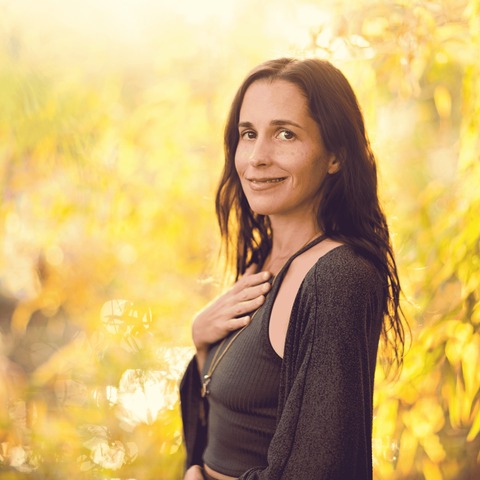
"Go forward in your dreams with courage. Be unafraid to step in new directions. Listen to your heart."
Oceans of love, Arielle 🙏Co-founder of Awakened Academy
The takeaways, in a nutshell
- You don't need to feel ready. You need the training that makes ready arrive.
- Three things make a coach: your inner work, the craft, and real practice. All three, not one.
- Choose a programme with live teaching, mentoring, real inner work, and a community of working coaches.
- A clear niche kills the imposter voice. Vagueness feeds it.
- First clients almost always come from people you already know. Tell them, simply.
Questions people ask
Do I need to be certified to become a spiritual life coach?
In most places, no, there's no law requiring it. But the right question is whether you'll be any good at it without proper training. A certification gives you the actual craft and the signal of trust clients recognise. Coaching well is a real skill, and skills are learned.
How long does it take to become a certified coach?
A proper programme runs from several months to a year, depending on depth. The training itself is one part of the timeline, the other is building the practice, which begins during training and continues after it. Most graduates have their first paying clients before they finish.
How do I choose my spiritual coaching niche?
Start with the place you've personally walked through and come out the other side of. That lived experience is your strongest niche. Then narrow further until you can finish the sentence "I help specific person who is stuck on specific thing to specific outcome" without flinching.
Can I make a real living as a spiritual life coach?
Yes, but not by accident. The coaches who build sustainable practices are the ones who treat it as a real profession: trained craft, a clear niche, packages built around outcomes rather than hours, and one marketing channel done consistently. Hobbyists stay hobbyists. Trained professionals build careers.
What's the difference between Awakened Academy and other certifications?
The programme is built around the three pillars in this article: deep inner work (your own dharma), the craft of holding transformational sessions, and real practice supported by mentoring and a global community of working coaches across 25+ countries. It's experiential rather than content-only, and graduates leave with both the training and the confidence to begin.
If you feel called to make this your work, the next step is the training.
Awakened Academy's Spiritual Life Coach Certification, the programme built on the three pillars in this article, with live teaching, 1-on-1 mentoring, and a community of working coaches across 25+ countries.
See the Certification → Want to talk it through first? Talk to a coach, free.Lots of love 🙏
Michael